Uramba Bahía Málaga National Natural Park protects one of the largest stretches of tropical rainforest on Colombia’s Pacific coast, where dense jungle, mangrove channels, rivers, and the Pacific Ocean meet. One of the most popular ways to experience the park is by boat, allowing you to reach places that are inaccessible by road while exploring its rich wildlife and dramatic coastal scenery.
We took the tour during our week-long stay on the Colombian Pacific coast. Our guesthouse host in Ladrilleros arranged the tour for us at 110,000 COP per person. The operator needed a sufficiently large group, which is usually easy to assemble on weekends but can be more difficult on weekdays. When we inquired on Monday about going on Tuesday, they managed to find enough participants at the last minute and called us early on Tuesday morning. We quickly got ready, our host arranged motorcycle taxis to take us to the port in Juanchaco for 5,000 COP per person, and we set off on what luckily turned out to be the only cloudy day of our entire stay.
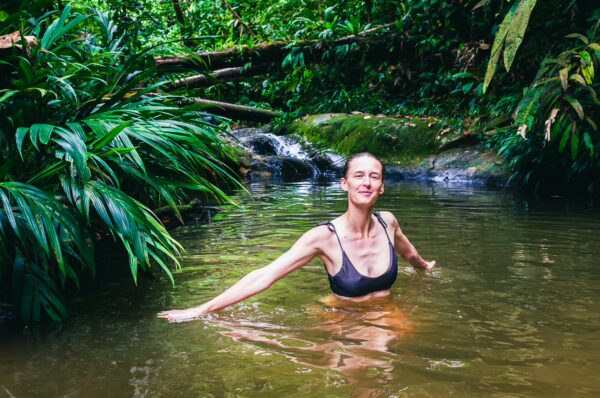
During the excursion, we visited four of the park’s best-known spots, each offering something different, from secluded freshwater pools and waterfalls to wild Pacific beaches. Below, I’ll take you through each stop in the order we visited them and share what the experience was like.
Contents
Affiliation disclosure: By purchasing goods or services via the links contained in this post, I may be earning a small commission from the seller's profit, without you being charged any extra penny. You will be thus greatly helping me to maintain and keep enriching this website. Thanks!
Tres Marías Pools –📍map
We had a little time before departure to grab a quick coffee and pastry from the small shop beside the pier. Around 8:30, our speedboat, carrying about a dozen passengers, left Juanchaco and sped across Bahía Málaga. We were the only foreign tourists on board. The route followed a coastline of dark rocky cliffs draped in dense rainforest. Small islets—tufts of green sticking out of the blue—were scattered throughout the bay. We skirted the Bahía Málaga Naval Base, one of the Colombian Navy’s main Pacific installations and a strategic base used to patrol the coast and combat drug trafficking, and after about 20 minutes, we reached our first stop.
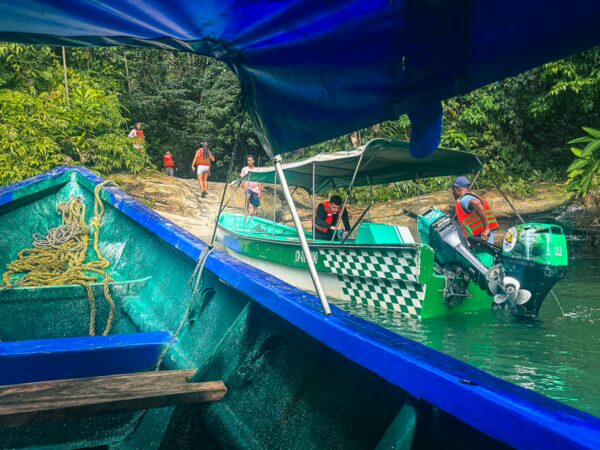
Despite its name, Tres Marías actually consists of more than three interconnected natural pools scattered among the rocks. A short uphill walk led us there, but the smooth rocks were incredibly slippery. Water shoes would have been ideal, though we managed barefoot. Annoying yellow flies kept landing on us, delivering surprisingly painful bites whenever we stopped for more than a few seconds.
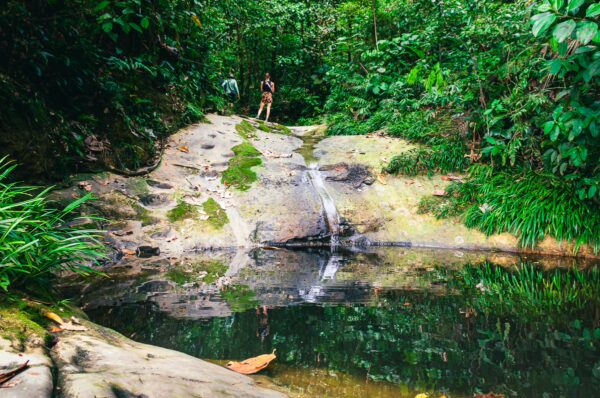
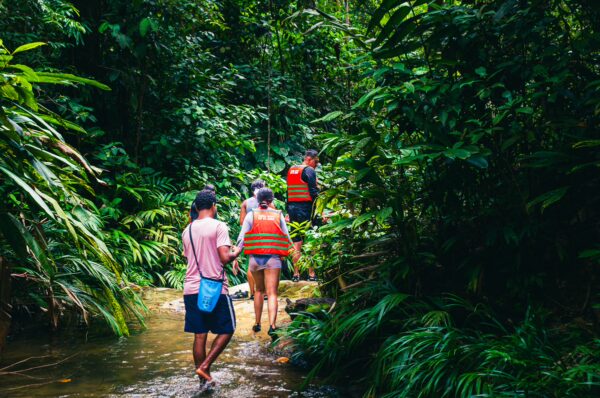
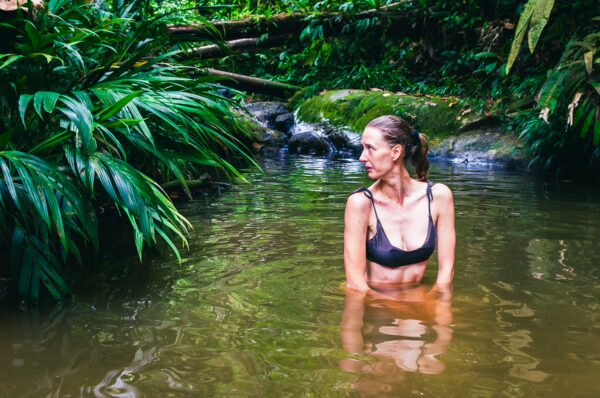
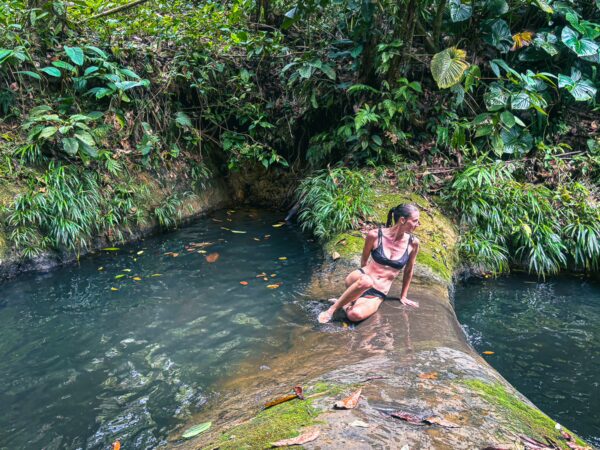
The pools themselves were beautiful, filled with cool freshwater and surrounded by lush rainforest. Some of the smooth rock formations formed natural slides into the water, making them even more fun to explore. Back at the landing point, there was also a narrow hole in the rocks, barely wider than a person’s waist, through which we could jump into the sea and swim out through an underwater opening. It was one of the most memorable parts of the stop.
La Sierpe Waterfall –📍map
Our second stop was La Sierpe Waterfall. As we entered the river mouth by boat, we could already see two waterfalls on opposite sides of the jungle-covered gorge. We disembarked and walked a short distance to the larger of the two. Visiting in the dry season, we found only a trickle of water spilling over the cliff. It looked far less impressive than the photos we’d seen from the rainy season, when the waterfall becomes a powerful torrent.
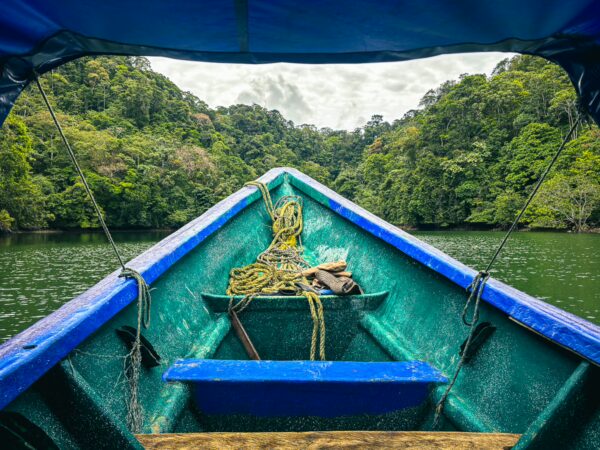
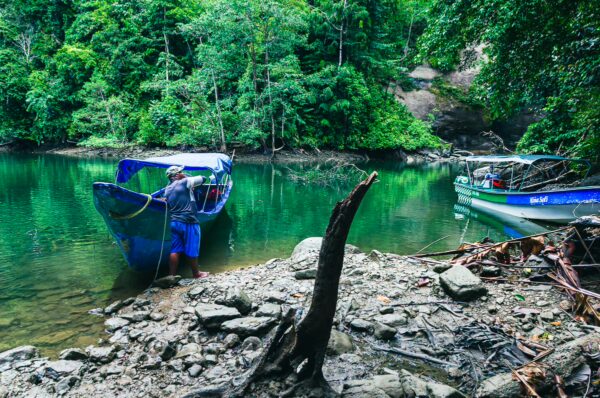
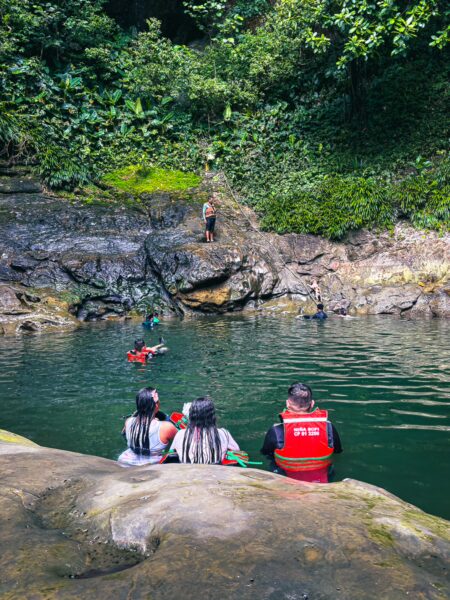
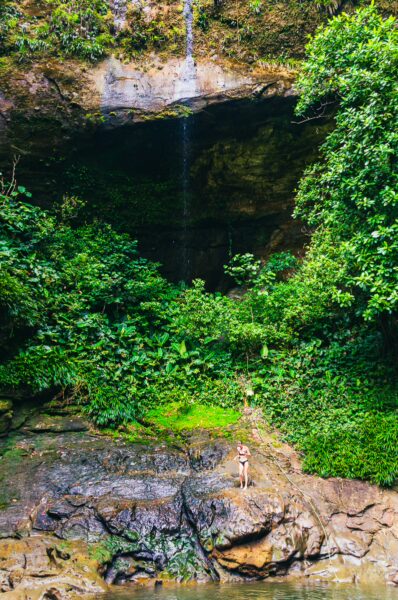
The pool below, however, was large, deep, and perfect for a swim. A rope fixed to the rocks beside the waterfall allowed us to climb up and jump into the water below, and several people from our group happily gave it a try. We relaxed there for a while before returning to the boat and setting off again shortly after 11 a.m.
Chucheros Beach –📍map
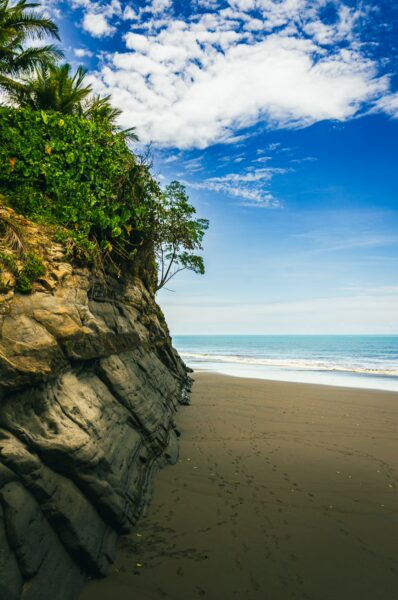
Our third stop was Chucheros Beach, a long stretch of fine black volcanic sand backed by dense rainforest. Apart from a couple of simple wooden shacks and scattered rubbish, there was almost nothing else there, giving the place a very remote feel.
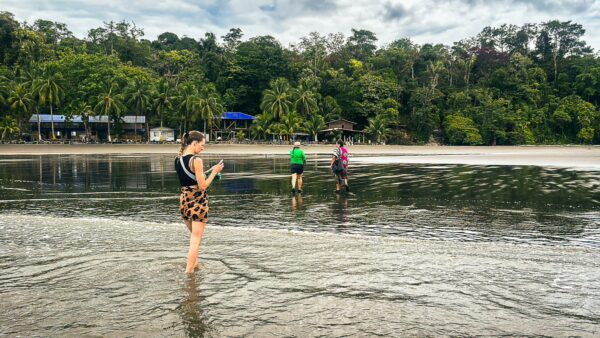
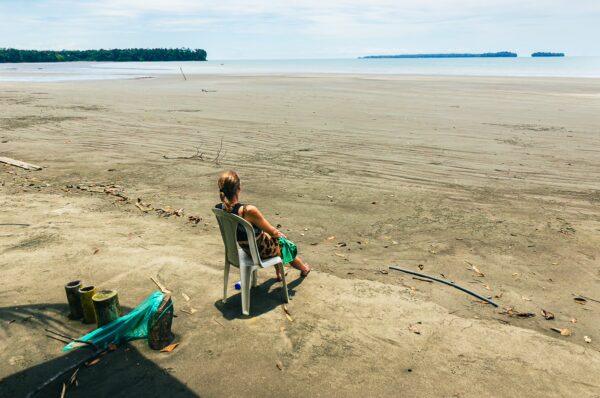
One of the shacks served as our lunch stop. We were treated to a simple but tasty meal of freshly caught fish with rice and lentils before having some free time to relax on the beach and stretch our legs before boarding the boat once again.
Juan de Dios Beach –📍map
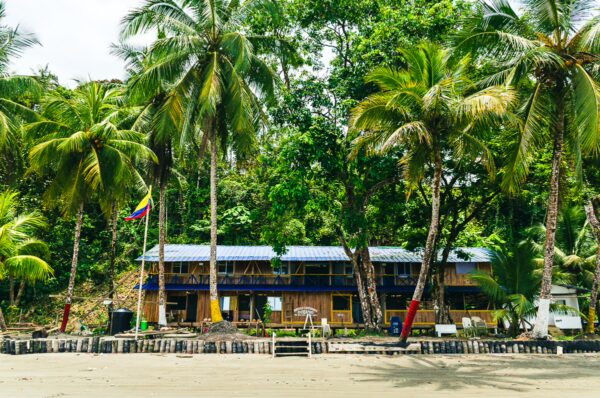
Our final stop was Juan de Dios Beach, located directly across the bay from Juanchaco. Unlike the previous beaches, this one had a small beachfront hostel. During our visit, it felt almost deserted, with just two guests and two members of staff around. We grabbed a couple of cold drinks, found a shady spot, and spent the next few hours relaxing by the sea.
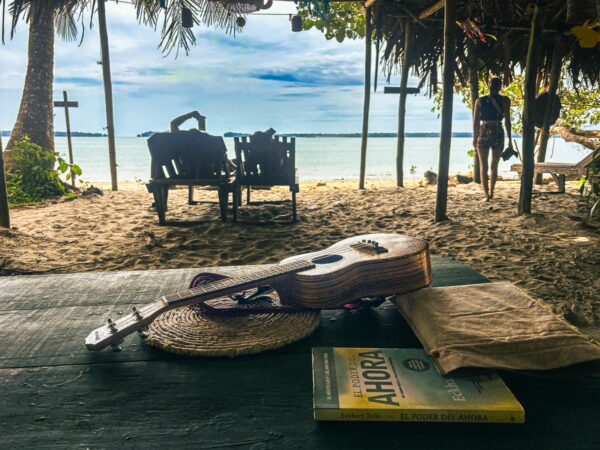
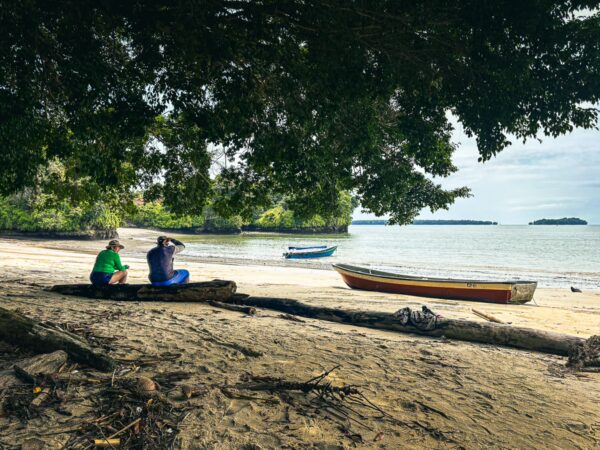
The beach itself was another broad stretch of dark sand framed by rainforest-covered cliffs, with gentle waves rolling onto the shore. The overcast weather gave the scenery a different atmosphere from the bright sunshine we’d had for the rest of the week, but it made for a pleasantly cool afternoon. Around 4 p.m., we boarded the boat one last time and made the short crossing back to Juanchaco, bringing an enjoyable day exploring Uramba Bahía Málaga National Natural Park to an end.
Accommodation & Activities in Juanchaco
Stay22 is a handy tool that lets you search for and compare stays and experiences across multiple platforms on the same neat, interactive map. Hover over the listings to see the details. Click on the top-right settings icon to adjust your preferences; switch between hotels, experiences, or restaurants; and activate clever map overlays displaying information like transit lines or concentrations of sights. Click on the Show List button for the listings to appear in a list format. Booking via this map, I will be earning a small cut of the platform's profit without you being charged any extra penny. You will be thus greatly helping me to maintain and keep enriching this website. Thanks!
Video
Photos
View (and feel free to use) all my photographs from Tres Marías, La Sierpe, Chucheros, and Juan de Dios.
⇧