Nestled in the green mountains above the town of Santa Rosa de Cabal, the Termales Santa Rosa de Cabal are among Colombia’s most famous hot springs. Fed by volcanic geothermal waters descending from the slopes of Los Nevados, the complex combines steaming mineral pools with one of the country’s most photographed natural settings: a tall waterfall crashing down through dense cloud forest beside the baths. Over the years, the springs have grown from a local bathing spot into a major attraction of the Coffee Region, drawing both Colombian families on weekend getaways and foreign travelers exploring the Andes.
For us, the hot springs became the first stop of our seven-day road trip through Colombia’s Eje Cafetero. Starting from Pereira, we drove up to Santa Rosa de Cabal in the afternoon and spent the rest of the day wandering around town, getting our first glimpse of the slower mountain atmosphere that defines much of the region. The town itself felt lively but relaxed, with plazas full of locals, roadside bakeries selling chorizos santarrosanos—the local sausage specialty—and mist drifting down from the surrounding hills by evening.
The next morning, we headed to the thermal baths early and ended up spending much of the day there. Between the steaming pools, the cool mountain air, the constant sound of rushing water, and the forest scenery, it was the kind of place where hours disappeared without much effort. In this post, I’ll share our experience visiting the Termales Santa Rosa de Cabal, along with practical information and useful tips in case you’re planning a trip yourself.
Contents
Affiliation disclosure: By purchasing goods or services via the links contained in this post, I may be earning a small commission from the seller's profit, without you being charged any extra penny. You will be thus greatly helping me to maintain and keep enriching this website. Thanks!
Getting to Santa Rosa de Cabal
As already mentioned, we visited the hot springs with the rental car we had picked up in Pereira. From the center of Santa Rosa de Cabal to the thermal complex, it’s about a 10 km drive climbing into the mountains. The last couple of kilometers are on an unpaved road, but at least during our visit, it was manageable with our regular 2WD vehicle. The drive took us roughly 30 minutes in total.
If you don’t have your own transport, getting there is still fairly straightforward. Santa Rosa de Cabal itself is well connected by bus with nearby cities like Pereira, Armenia, and Manizales. From Pereira, the journey takes around 40 minutes. There are also direct buses from Armenia’s terminal, with the trip taking just under two hours.
Once in town, the cheapest way to reach the springs is by the shared Willys jeeps departing from the main square (📍jeep stand). These classic regional jeeps are a common sight throughout the Coffee Region and run frequently throughout the day. Expect to pay roughly 7,000 COP per person each way, with the ride taking around 30 minutes. There’s also a local bus operated by Transperla del Otún, costing around 3,000 COP, with several daily departures between town and the thermal complex. Taxis and private transfers are another option, either from Santa Rosa de Cabal itself or directly from Pereira, though naturally more expensive.
If you’re staying elsewhere in the Eje Cafetero and prefer not to deal with transport logistics, organized day tours are widely available as well. This top-rated one, for example, offers guided visits with pickup from Salento, Filandia, Armenia, or Pereira.
Where to Stay in Santa Rosa de Cabal
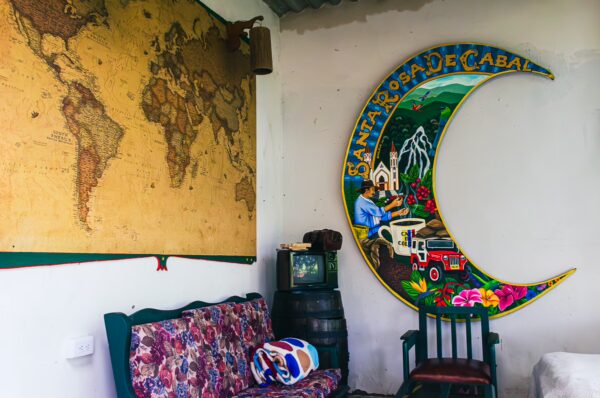
We stayed at Casa Santa Rosa Hotel Boutique & Gardens. The place offers small, simple, but cozy and inexpensive private rooms, along with a lovely garden full of greenery and plenty of outdoor sitting space. There’s also an in-house restaurant and bar, and the owners were very friendly and helpful during our stay. The hotel is located about a 10-minute walk from the central square, in a quieter part of town.
If you’re looking for something more upscale or closer to the springs, you can browse more accommodation options in the widget below or check out my in-depth guide to where to stay in Santa Rosa de Cabal.
Stay22 is a handy tool that lets you search for and compare stays and experiences across multiple platforms on the same neat, interactive map. Hover over the listings to see the details. Click on the top-right settings icon to adjust your preferences; switch between hotels, experiences, or restaurants; and activate clever map overlays displaying information like transit lines or concentrations of sights. Click on the Show List button for the listings to appear in a list format. Booking via this map, I will be earning a small cut of the platform's profit without you being charged any extra penny. You will be thus greatly helping me to maintain and keep enriching this website. Thanks!
Termales Santa Rosa vs San Vicente
One thing worth knowing before your visit is that there are actually two different thermal complexes near Santa Rosa de Cabal: Termales Santa Rosa and Termales San Vicente. We briefly considered both before deciding where to go.
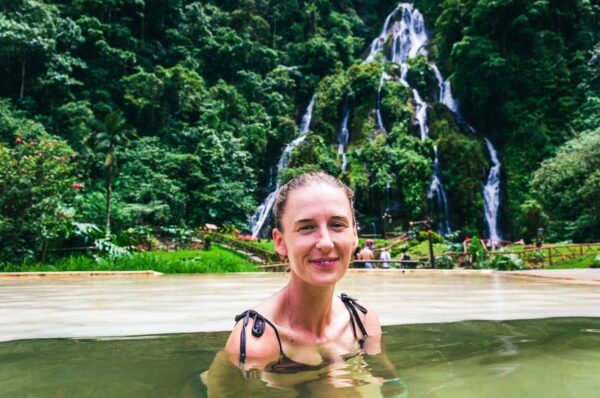
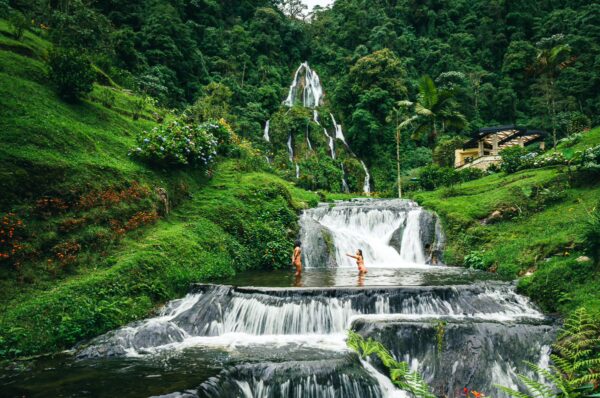
Termales Santa Rosa, the one we visited, is the famous and more developed option located about 10 km from town. It has multiple thermal pools, restaurants, spa facilities, changing areas, and other services, but the real centerpiece is the enormous waterfall crashing down beside the baths. The contrast between the steaming pools and the cold torrent of water surrounded by thick mountain vegetation is what gives the place its distinctive atmosphere. It’s also the easier and more accessible option overall.
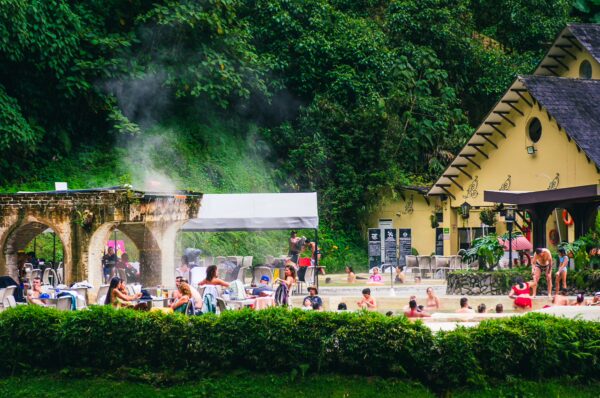
San Vicente, located farther into the mountains around 17 km from town, is generally considered the quieter alternative. From what we gathered while researching the trip, the setting there feels more secluded and nature-oriented, with fewer people, more forest around the pools, and a stronger focus on wellness and relaxation. The road there is also rougher and access a bit less straightforward.
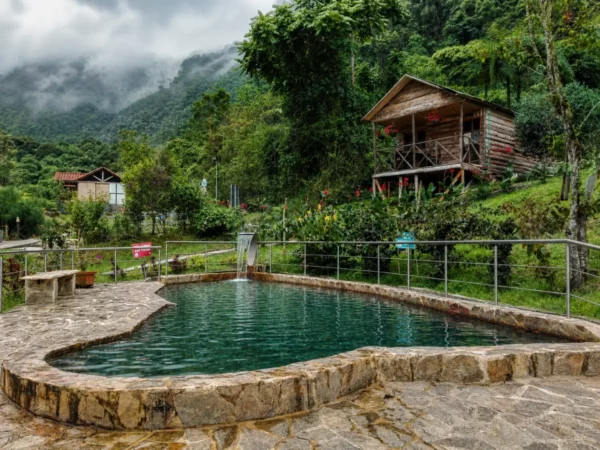
In the end, we chose Termales Santa Rosa mainly because of the waterfall, and I’m glad we did. It really is spectacular in person and easily one of the most memorable landscapes we saw during our week in the Coffee Region. Despite the place’s popularity, visiting early on a weekday morning turned out to be a good compromise: lively and active, but not overwhelmingly crowded.
Exploring the Town of Santa Rosa de Cabal
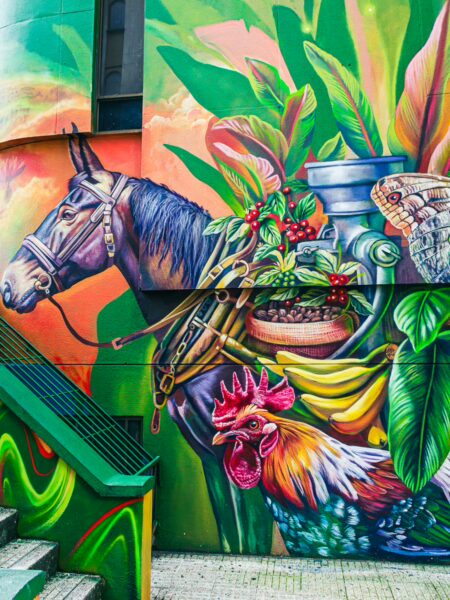
After arriving from Pereira and settling into our guesthouse, we headed straight out to explore the center of Santa Rosa de Cabal on foot. Later that evening, we went back out again for dinner and another wander through town after dark. The atmosphere immediately felt different from Pereira: smaller, slower, more provincial, but lively in its own way. Carrera 14, leading toward the center from our accommodation, was full of color, local shops, cafés, traffic, and murals scattered across walls and storefronts. For some reason, chickens appeared constantly in the town’s street art and decorations.
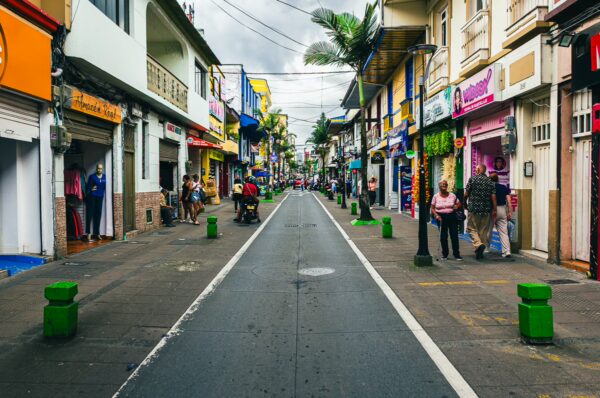
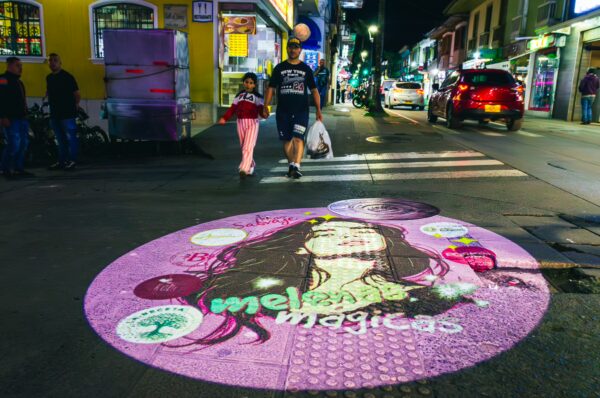
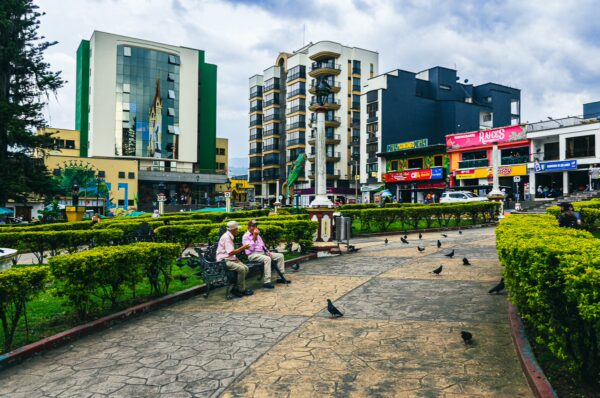
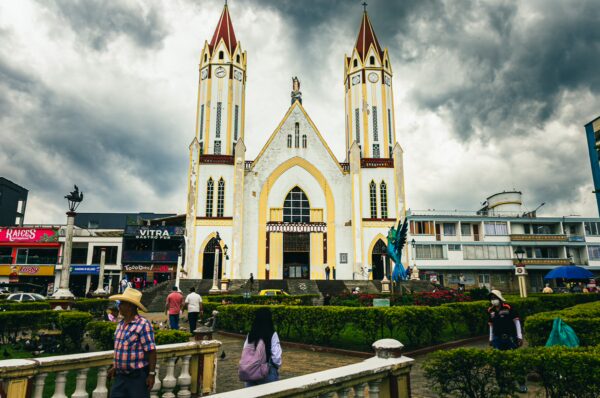
The focal point of town is Parque de las Araucarias (📍map), the main square lined with tall araucaria trees from which it takes its name. Locals sat chatting on benches while pigeons wandered between small gardens and bird sculptures scattered around the plaza. Overlooking the square stands the Basilica of Our Lady of Victories, a large neo-Gothic church whose twin towers dominate the skyline of central Santa Rosa. Under the dark mountain clouds rolling above town that afternoon, the whole setting had a dramatic look that felt almost theatrical.
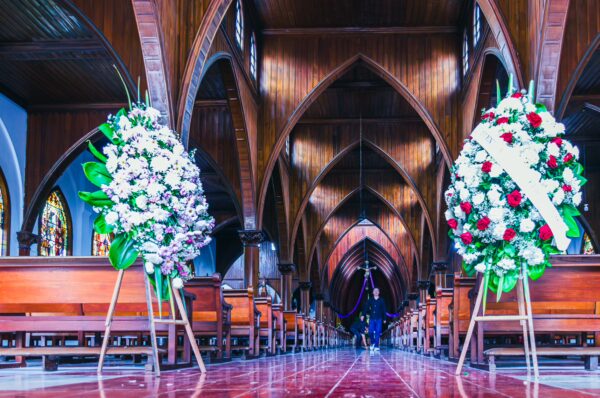
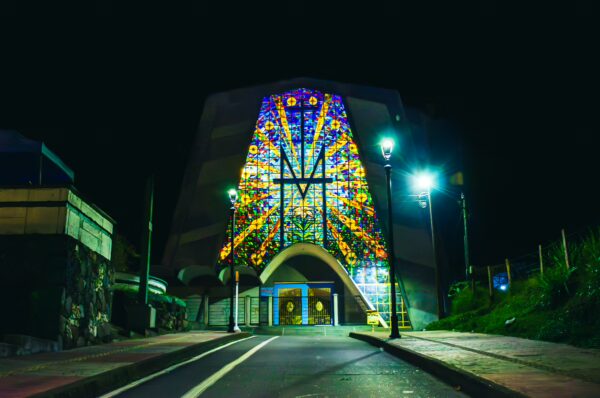
Later in the evening, we walked uphill to the Santuario Nacional de la Virgen de la Medalla Milagrosa (📍map), a much more modern church with a striking stained-glass façade that becomes especially impressive once illuminated at night. The surrounding streets were almost empty compared to the busy center below, giving the area a completely different atmosphere.
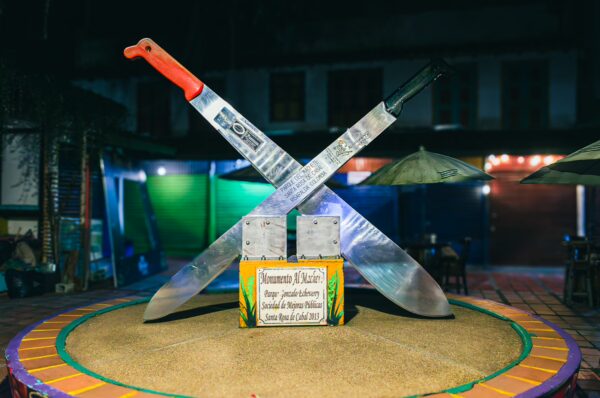
One of the stranger landmarks we came across was the so-called Machete Park (📍map), essentially a small plaza built around a monument of giant crossed machetes. The place felt somewhere between public monument, local symbol, and restaurant promotion. The adjacent restaurant actually looked pretty inviting, and the staff enthusiastically tried to draw us in, but we had already eaten by then.
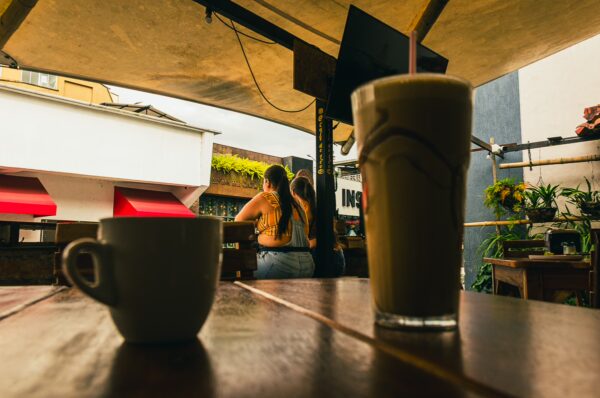
For lunch earlier that day, we stopped at this cute café, while later at night we grabbed burgers at Pepe’s by the square before finishing the evening with a cholao—a popular Colombian shaved-ice dessert loaded with fruit, syrup, condensed milk, and whatnot—from this place next door.

Completely by chance, the evening also produced one of the oddest coincidences I’ve experienced while traveling. Just as we’d finished eating, we suddenly ran into an Italian friend from Athens, without having had the slightest idea she was even in Colombia. We stood there chatting in the middle of Santa Rosa de Cabal, both equally confused by the improbability of it. Thinking about it afterward, I can recall only one other time I’ve randomly met an acquaintance on another continent.
Our Experience at Termales Santa Rosa
We headed to the thermal baths early in the morning after a rough night of sleep. Throughout half the night, our rental car’s alarm kept randomly going off, probably triggered by the heavy rain hammering the town. I suspect that not only we but the whole guesthouse and a decent part of the neighborhood had a rough night’s sleep.
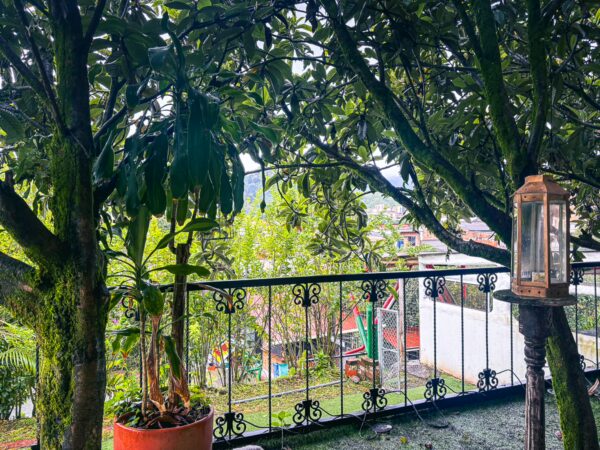
The drive up to the springs the next morning, however, quickly improved the mood. Mist still hung over the green hillsides as we climbed higher into the mountains. Upon arrival, a lad enthusiastically rushed toward the car to park it for us, but I preferred handling that complicated engineering operation myself and keeping the tip budget intact. Our guesthouse host had also given us a voucher that supposedly allowed us to skip the entrance queue, except there was no queue, so I forgot to show it. Somewhere in Santa Rosa, a commission quietly evaporated.
Entrance cost us 60,000 COP per person. Before going in, staff searched our bags carefully, less for security concerns than for outside food and drinks. And yet, the road remained unpaved.
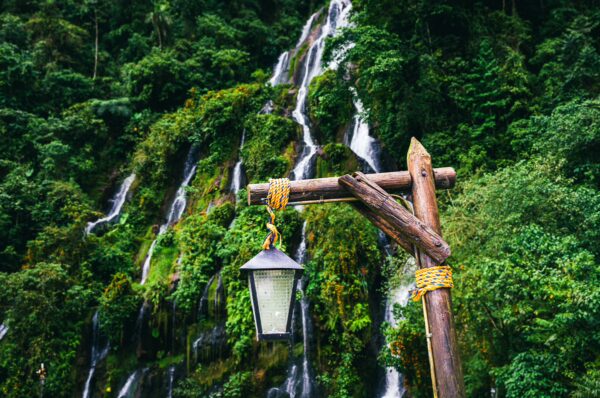
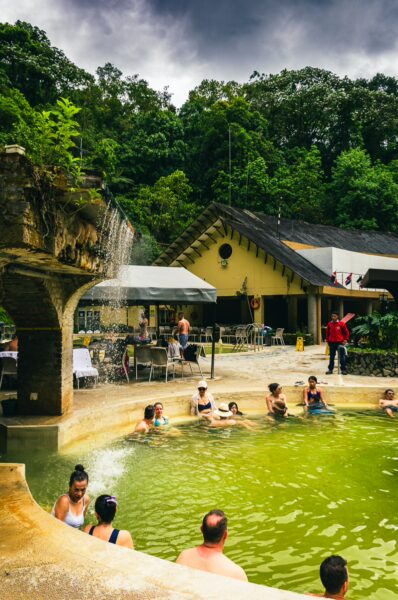
From the entrance, a short path climbed gradually upward through the complex past a succession of thermal pools, little cascades, gardens, and dense tropical vegetation. The setting immediately justified the place’s reputation. Bright flowers lined the walkways, butterflies fluttered everywhere—including the 88 butterflies that reminded me of Iguazu Falls—while steam drifted upward from the warm water into the cool mountain air.
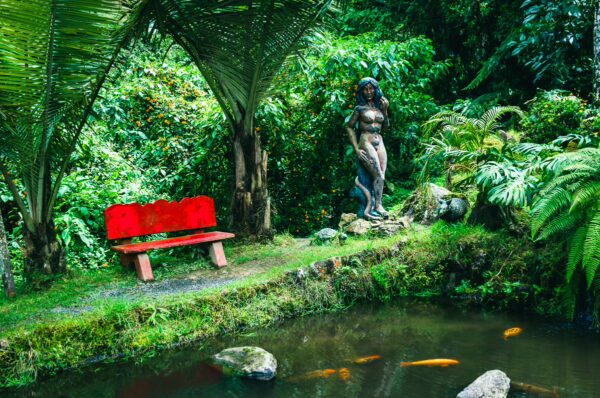
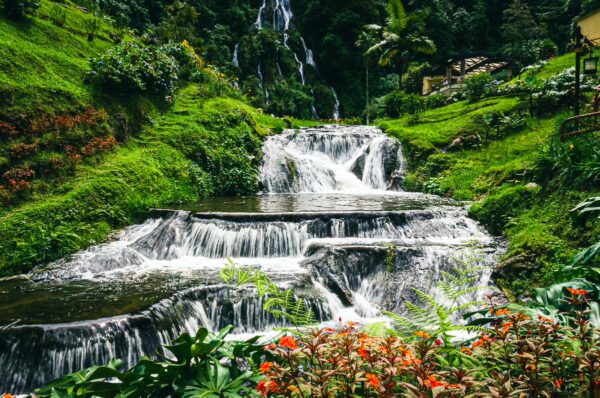
The atmosphere remained calm during the morning hours, though the number of visitors steadily increased toward noon. Police were present around the complex, regularly patrolling the grounds. Despite the growing crowds, though, the place never felt overwhelmingly packed during our visit.
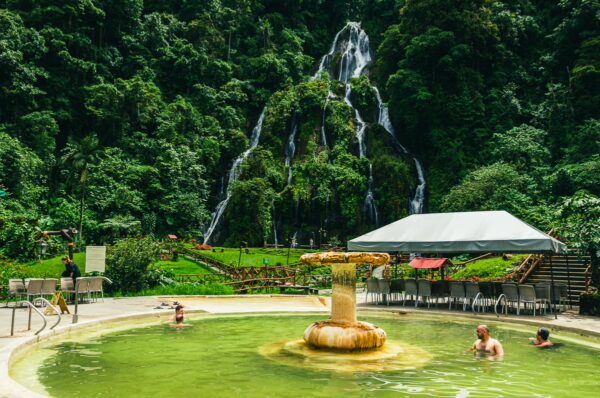
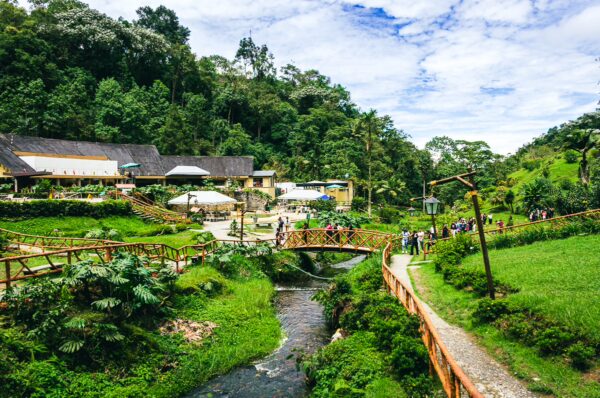
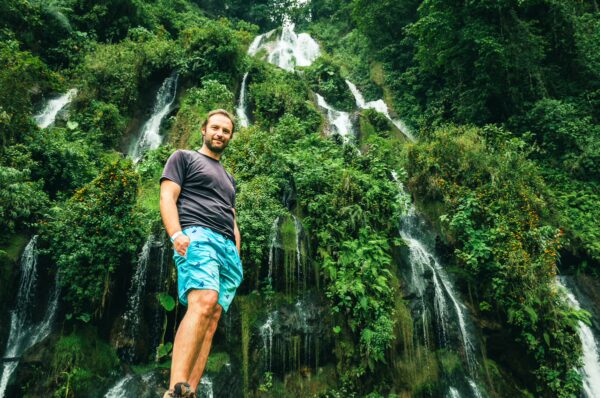
The pools themselves varied considerably in temperature, from very warm baths where people sat motionless for ages to colder pools ideal for a quick reset. The cold plunge beneath the waterfall was especially memorable. And then there was the waterfall itself: enormous, thunderous, and surrounded by impossibly lush greenery cascading down the mountainside from every direction. Between the rising steam, the sound of rushing water, and the jungle-like vegetation engulfing the entire complex, the whole place felt almost unreal at times.
Video
Photos
View (and feel free to use) all my photographs from Santa Rosa de Cabal and Termales Santa Rosa.
More from our Road Trip in Central Colombia
- 7-Day Colombia Road Trip: Coffee Region & Tatacoa Desert
- Driving Colombia’s Ruta del Nevado del Ruiz: Volcanoes & Páramo Landscapes
- Murillo, Colombia: 1 Day in a High-Altitude Andean Village
- Líbano, Colombia: a Walk through a Traditional Andean Town
- Honda, Colombia: 1 Day in a Colonial Town on the Magdalena River
- Tatacoa Desert: Red and Grey Canyons in Colombia
- Ibagué & Combeima Canyon: 1 Day in Tolima’s Andean Landscapes
- Montenegro, Colombia: 1 Day in Quindío’s Coffee Town
- Filandia, Colombia: 1 Day in a Colorful Andean Village