Travelling from Cali to Juanchaco is a two-stage journey that combines a scenic bus ride across Colombia‘s Western Andes with a speedboat crossing along the Pacific coast. While the distance isn’t great, the trip takes most of the day and requires changing transport in Buenaventura, Colombia’s main Pacific port. This post recounts our journey from Cali to Juanchaco, including the transport we used, ticket prices, travel times, and what the experience was like along the way.
Cali to Buenaventura by Bus
After one day exploring Cali, we left our lodge in San Antonio early in the morning and took a taxi to the city’s bus terminal (📍map). Despite the relatively short distance, heavy traffic turned the ride into an adventure of its own. Our driver was trying, to little effect, to zigzag through the congestion, braking abruptly and leaning on the horn almost continuously, apparently convinced that this would somehow make the endless queue of cars ahead vanish.
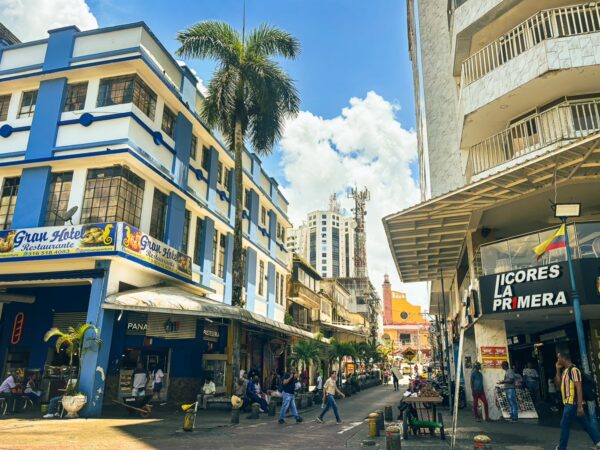
As soon as we stepped through the terminal entrance, a member of staff called us over to the next departing bus to Buenaventura, and within minutes we were on the road shortly before 8:00 a.m. The 116 km journey to Buenaventura took around 3.5 hours, including a food stop roughly halfway. The scenery changed gradually from open hillsides to dense tropical forest as the road followed a rushing river through the mountains. The highway was in good condition for most of the journey, although the final approach into Buenaventura slowed considerably due to roadworks that squeezed traffic into a single narrow lane.
Buenaventura to Juanchaco by Speedboat
The moment we stepped off the bus in Buenaventura’s bus terminal (📍map), a man from one of the boat companies approached us and offered to take us to the ticket office. I asked him whether he gets commissions from the boat company, because I wasn’t going to tip him for following us to the port. He claimed to work for them and not expect a tip from us. Even so, after we bought our tickets, he continued following us around and entreating for a drink.
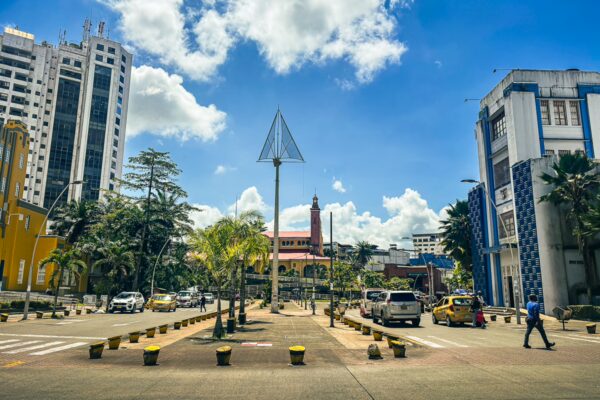
The passenger terminal (📍map) was a ten-minute walk from the bus terminal. We bought round-trip tickets for 150,000 COP per person, with the return ticket remaining valid for 15 days. Our boat was scheduled to leave at 1:00 p.m., with passengers asked to arrive by 12:30, leaving enough time for a quick lunch and coffee. In the coffee place, I chatted with an elderly Peruvian former sailor who spoke a little Greek—there is hardly ever a time I find myself in a major port and don’t get the chance to speak my mother tongue. We also stopped at an ATM—a decision that turned out to be essential, as there were no ATMs or currency exchange services in Juanchaco or Ladrilleros, and virtually nobody accepted cards, including lodges and tour operators.
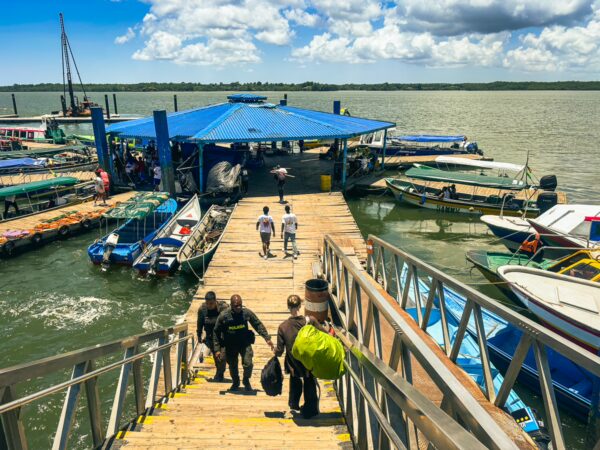
A long pier led to the boats, where porters pushed carts piled high with supplies destined for the coastal villages. The wind was strong, people shouted over the noise, and the whole place buzzed with activity. We hopped onto the boat together with a handful more passengers from Bogotá and Cali, and before long our small, rickety speedboat set off into the Pacific.
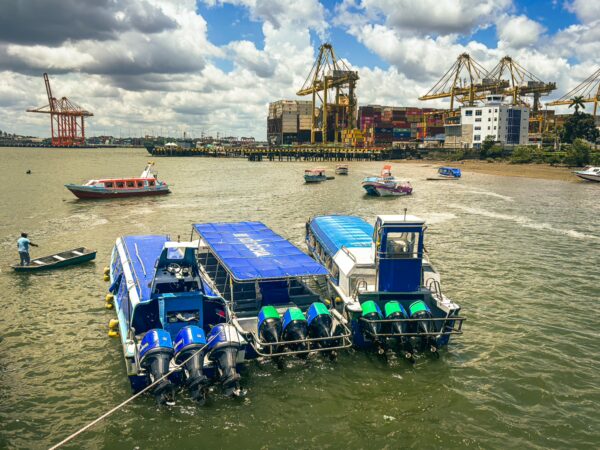
The crossing proved much rougher than expected. Waves slammed against the hull, spraying everyone aboard with seawater as we followed the coastline past sparse stilt villages, the odd isolated resort, and long stretches of untouched rainforest. Cargo ships lingered offshore, and seabirds circled them.
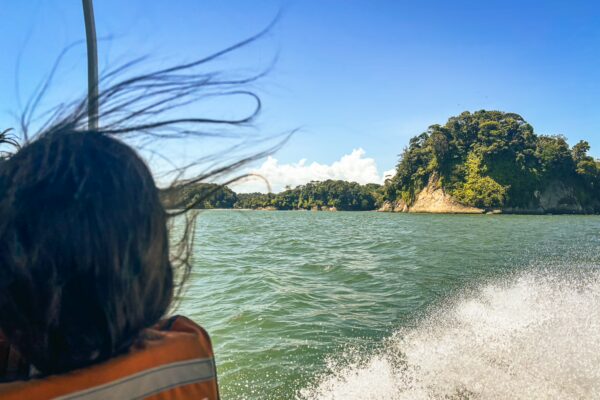
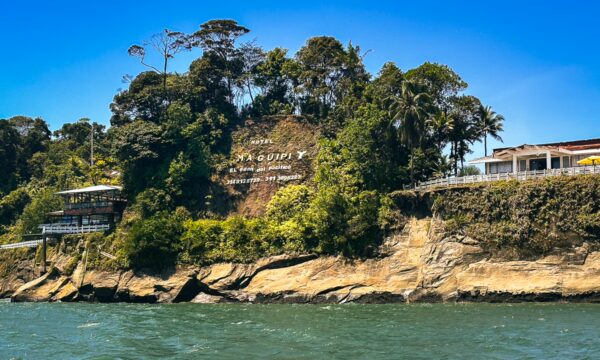
About halfway through the journey, one of the boat’s two propellers struck a floating log and was damaged beyond use. We continued on a single engine while the second crew member moved to the bow to watch for more floating debris—a role he was probably meant to fill from the beginning. Thus we avoided breaking the second propeller and drifting out to the open Pacific. There was another brief delay when the captain brought some of our copassengers to the wrong beach before continuing to the right one.
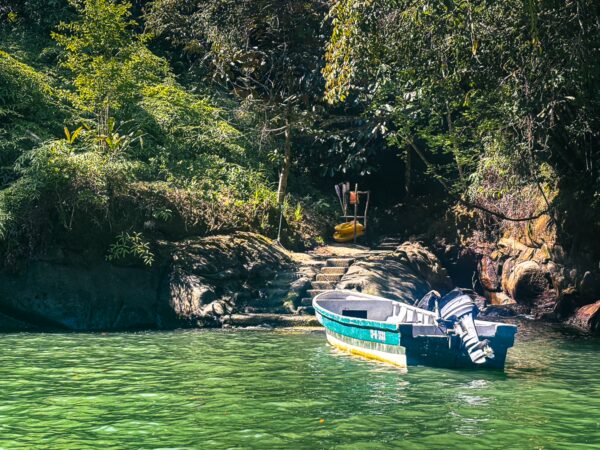
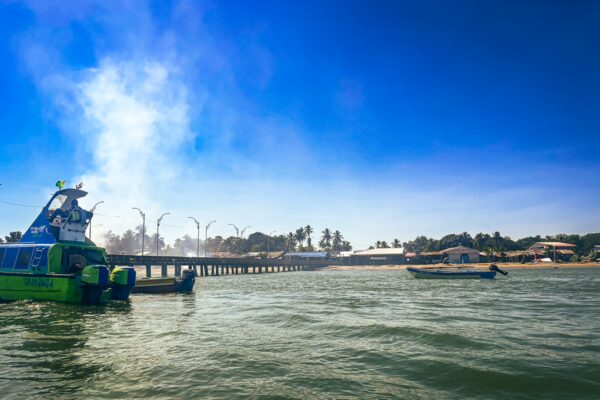
The trip was supposed to take about an hour. After nearly three hours, we finally got off at Juanchaco’s main pier. We walked a short distance along sandy tracks until we found the local taxi stand at the western end of the village (📍map). By taxis, I mean motorcycles with attached trailers that transport people, luggage, animals, whatever, between the villages. For 5,000 COP per person, they took us to our beachfront lodge in Ladrilleros, which would be our home for the following week on this wild stretch of Colombia’s Pacific coast.
Affiliation disclosure: By purchasing goods or services via the links contained in this post, I may be earning a small commission from the seller's profit, without you being charged any extra penny. You will be thus greatly helping me to maintain and keep enriching this website. Thanks!
Accommodation & Activities in Juanchaco
Explore stays on the map below, or check out my full guide to accommodation in the Colombian Pacific.
Stay22 is a handy tool that lets you search for and compare stays and experiences across multiple platforms on the same neat, interactive map. Hover over the listings to see the details. Click on the top-right settings icon to adjust your preferences; switch between hotels, experiences, or restaurants; and activate clever map overlays displaying information like transit lines or concentrations of sights. Click on the Show List button for the listings to appear in a list format. Booking via this map, I will be earning a small cut of the platform's profit without you being charged any extra penny. You will be thus greatly helping me to maintain and keep enriching this website. Thanks!